

Indian Oil Corporation, Bharat Petroleum and Hindustan Petroleum Corporation have rejected the allegations, questioning the procedures followed by the state government during its investigation. The companies maintain that the claims cannot be substantiated because the inspection and testing were not conducted in accordance with prescribed regulatory and technical procedures.
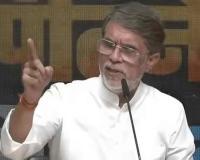
Karnataka's Minister for Food, Civil Supplies, Consumer Affairs and Legal Metrology, Rizwan Arshad, recently alleged that major oil companies were supplying petrol with ethanol content exceeding the permitted limit.
According to the minister, samples collected from Bengaluru, Kolar, Chikkaballapur, Bengaluru Rural, Ramanagara, Mangaluru and Tumakuru districts showed ethanol blending levels ranging from 26% to 31.2%. Based on these findings, the state government has sought action against the oil companies over the alleged violation of the prescribed ethanol blending limit.
However, Indian Oil Corporation, Bharat Petroleum and Hindustan Petroleum Corporation have challenged the state's findings. The companies stated that the conclusions were not based on tests conducted in accordance with the prescribed statutory and technical procedures.
They maintained that the E20 petrol supplied by them across Karnataka and other parts of the country complies with the Bureau of Indian Standards' IS 17021 specification.
The oil companies have also raised serious questions about the sample collection and testing methodology adopted in October 2026, disputing the validity of the state's findings.
The disagreement has brought the ethanol content of petrol, the reliability of fuel testing procedures and compliance with prescribed blending standards into focus, with the Karnataka government and public sector oil marketing companies maintaining opposing positions over the alleged excess ethanol levels.
About The Author








Comment List